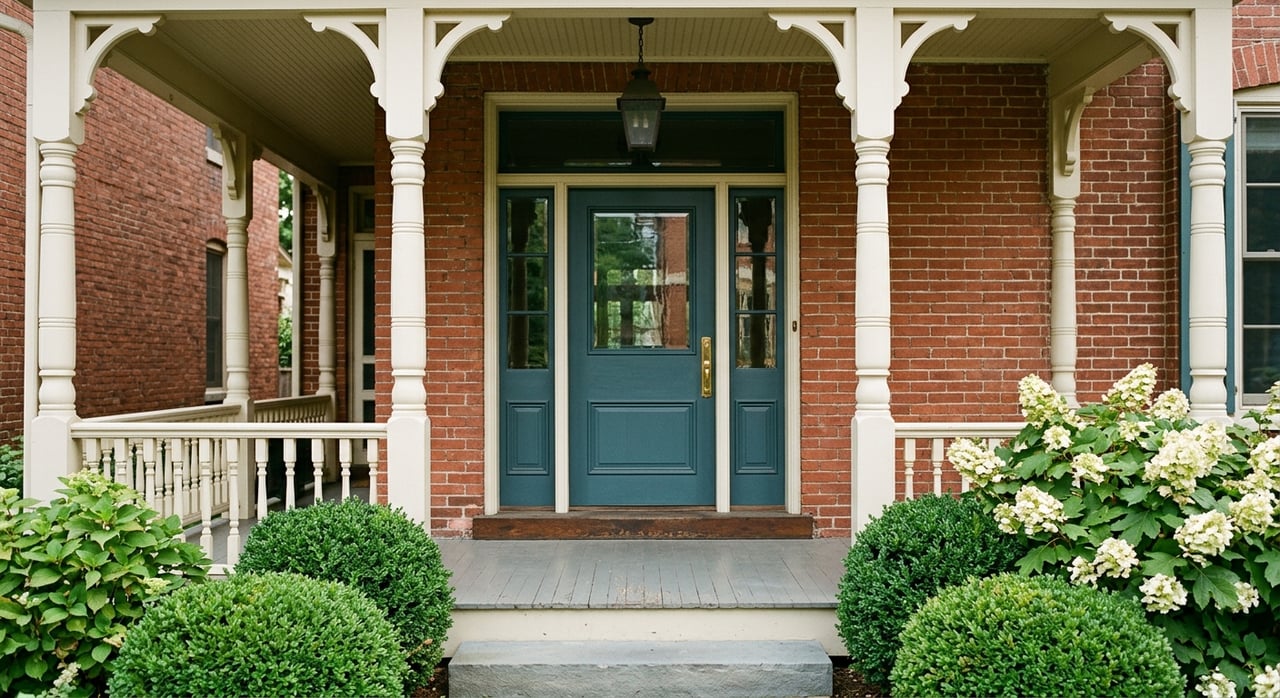
Dreaming about a historic home near downtown Franklin? It is easy to fall for the front porch, original windows, and timeless architecture, then realize the buying process comes with a few extra layers. If you want charm without surprises, understanding local preservation rules, pricing, and due diligence can help you buy with more confidence. Let’s dive in.
What makes a home historic here?
In Franklin’s downtown core, “historic” is not just a style label. Downtown Franklin’s Historic District is the city’s oldest residential and commercial core, centered around the public square and courthouse, with many buildings dating to the 19th and early 20th centuries.
You will also see a range of architectural styles in and around the district, including Federal, Greek Revival, Italianate, and Victorian homes. That variety is part of what makes the area so appealing to buyers who want character and a strong sense of place.
The most important thing to know is this: local designation matters more than National Register status when it comes to what you can change. Franklin’s Historic Preservation Overlay and local landmark rules are enforceable through city ordinance, while National Register listing alone does not control local review.
Why local rules matter most
If you are buying in Franklin’s downtown core, one of your first questions should be whether the property is inside the Historic Preservation Overlay, often called the HPO, or designated as a local landmark. That status directly affects what kind of review may be required before exterior work can move forward.
This is where many buyers get tripped up. A home may look like a simple cosmetic project, but local review can apply to much more than major additions or demolition.
What changes may need approval?
Franklin requires a Certificate of Appropriateness, or COA, before many types of exterior work in the HPO. The city lists a wide range of projects that can trigger review.
These can include:
- New construction
- Additions
- Relocation of a structure
- Full or partial demolition
- Window replacement
- Siding or masonry changes
- Roofing changes
- Canopies
- Fences or walls
- Site features
- Modern mechanical or rooftop equipment
- Interior changes that affect exterior appearance
Some minor work may be approved administratively, but Franklin also notes that a preliminary staff meeting can be helpful. For buyers, that means it is smart to ask questions early, especially if you already have renovation plans in mind.
How additions are reviewed
Historic homes often come with smaller rooms, older layouts, or limited storage, so many buyers think about expanding. In Franklin, additions are possible, but they are reviewed carefully.
The Historic Zoning Commission looks at exterior work through the city’s design guidelines. For historic residential buildings, the addition footprint generally should not exceed 50 percent of the footprint of the historic building.
Review can also include:
- Height
- Massing
- Scale
- Setbacks
- Parking
- Drive aisles
- Landscape and hardscape features
In practical terms, a good idea on paper still needs to fit the character and site conditions of the property. If you are buying with future renovation in mind, this should be part of your decision before you close.
What the downtown price range looks like
Franklin as a whole remains a high-priced market. Public market reporting showed a March 2026 median sale price of $827,000, while a separate estimate placed the average Franklin home value at $893,851.
The downtown historic core tends to sit well above that overall market picture. Recent public listing examples showed asking prices around $995,000, $999,999, $2.6 million, $2.824 million, and $4.25 million.
Based on those active listings, the immediate downtown core currently looks more like roughly $1 million to $4 million+, with some especially large or well-located homes above that range. That is not a formal median, but it does give you a realistic sense of what buyers may encounter when shopping near the square.
Why historic homes cost more to own
Purchase price is only part of the equation. Historic homes can also bring added costs for repairs, specialty materials, skilled labor, and a longer planning timeline.
That does not mean buying one is a bad financial move. It means you should budget for stewardship, not just ownership. If preserving original character matters to you, you may find the tradeoff worth it.
A smart due diligence checklist
When you buy a historic home in downtown Franklin, your due diligence should go beyond a standard showing and inspection. You want a clear picture of what the property is, what has been approved in the past, and what your future plans may require.
Start with these questions:
- Is the property within the Historic Preservation Overlay?
- Is it a local landmark?
- Which past repairs or alterations already received COAs?
- Will your planned work require Historic Zoning Commission review?
- Will a COA need to be approved before a building permit or site plan can move forward?
Those answers matter because Franklin requires approved COAs before later permit steps. If you skip this part, you could buy expecting a quick update and then face delays, redesigns, or added costs.
Older-home inspections need a different lens
Historic-home inspections should be more focused than a basic walkthrough. Older homes can have aging systems, deferred maintenance, or materials that need specialized handling.
For homes built before 1978, lead-based paint should be part of your inspection planning. The EPA notes that these homes are more likely to contain lead-based paint, and renovation work can create dangerous lead dust.
Asbestos also deserves careful attention. The EPA states that asbestos usually cannot be identified by sight, which means any suspected disturbance should be handled by trained and accredited professionals.
Preservation-friendly repairs to expect
Owning a historic home often means taking a repair-first approach. That is especially true if you want to protect the home’s original features and stay aligned with preservation guidance.
The Tennessee Historical Commission encourages owners to retain and repair historic windows when possible. If replacement is unavoidable, the replacement should closely match the original.
The same careful approach applies to masonry and systems. Compatible repointing methods, limited masonry cleaning, and thoughtful HVAC routing can help preserve historic materials and reduce visual clutter.
Are there tax credits or grants?
This is one of the most common questions buyers ask, and the answer is often misunderstood. In general, owner-occupied private residences do not qualify for the federal Historic Tax Credit.
That credit applies to certified historic structures used for income-producing purposes. So if a property may eventually be used as rental or mixed use, that is where a documented rehab incentive could become relevant.
Tennessee Historical Commission preservation grants are also not a homebuying subsidy. They are matching grants for projects with public benefit on National Register-listed properties.
Who is a good fit for a downtown historic home?
A historic home in Franklin’s downtown core is usually a strong fit for buyers who value architecture, authenticity, and walkable proximity to the heart of the city. It can also work well for buyers who are patient, organized, and comfortable planning ahead.
If you want a fully flexible renovation project with fast timelines and fewer approvals, newer construction may feel simpler. But if you love original details and understand the value of preservation-sensitive work, downtown Franklin can offer a truly distinctive ownership experience.
How to buy with confidence
The best historic-home purchases usually start with clear expectations. You want to understand the property’s designation, review any past approvals, estimate the real cost of maintenance, and think carefully about any future work before making an offer.
That is where local guidance can make a big difference. A thoughtful buying strategy can help you balance emotion with due diligence, so the home that wins your heart also makes sense on paper.
If you are exploring historic homes in Franklin or comparing them with other options across the greater Nashville area, The Kyle Smallen Group can help you evaluate the details, understand the market, and move forward with a plan that fits your goals.
FAQs
What makes a home historic in downtown Franklin?
- In downtown Franklin, a home may be considered historic because it sits within a recognized historic district or has local landmark status, but the key factor for buyers is whether it falls under Franklin’s local Historic Preservation Overlay or local landmark review.
What is the Historic Preservation Overlay in Franklin?
- The Historic Preservation Overlay is a local zoning tool used by the City of Franklin to regulate certain changes to historic properties, especially exterior alterations, through an enforceable review process.
Do Franklin historic homes require approval for renovations?
- Many exterior projects on properties within the HPO require a Certificate of Appropriateness before work can move forward, and some projects must be reviewed before permit steps can begin.
Can you add onto a historic home in Franklin?
- Yes, additions may be allowed, but they are reviewed carefully under Franklin’s design guidelines, and for historic residential buildings the addition footprint generally should not exceed 50 percent of the original historic building footprint.
What price range should buyers expect in Franklin’s downtown core?
- Based on recent public listing examples, buyers should expect many homes in the immediate downtown core to fall roughly between $1 million and $4 million+, which is above Franklin’s broader market benchmarks.
Do owner-occupied historic homes in Franklin qualify for tax credits?
- Generally, no. The documented federal Historic Tax Credit applies to certified historic structures used for income-producing purposes, not owner-occupied private residences.
What inspections matter when buying an older Franklin home?
- Buyers should consider a lead- and asbestos-aware inspection plan, especially for homes built before 1978, because renovation or disturbance of older materials can create health and safety risks.
Is buying a historic home in Franklin right for every buyer?
- Not always. Historic homes are often best for buyers who value original character and are comfortable with added planning, documentation, and preservation-sensitive repairs.